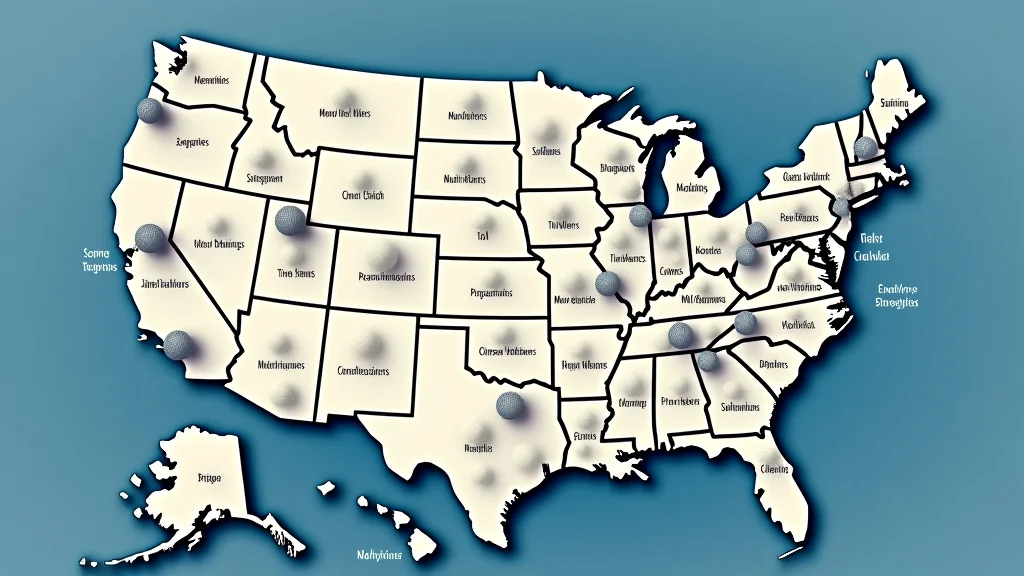
Understanding US Time Zones
Time Zone World >> Time Zone>> Understanding US Time Zones
Understanding US Time Zones
Figuring out us time zones can be tricky at first. There are quite a few of them, and they don’t always line up neatly. People often get confused when planning calls or trips across the country.
Don’t worry, though. We’ll make it simple and easy to follow, step by step. Get ready to learn about the different times across the United States.
Key Takeaways
- The United States has six main time zones covering the contiguous states and its territories.
- Each time zone follows a specific standard time, but Daylight Saving Time can shift these by an hour.
- Knowing the abbreviations and offsets of each time zone is helpful for scheduling.
- Alaska and Hawaii have their own distinct time zones that differ from the mainland.
- Understanding how to convert between these time zones is a practical skill.
- Keeping track of time zone changes, especially during Daylight Saving Time, prevents confusion.
Exploring the Main US Time Zones
The United States spans a large geographical area, which naturally leads to multiple time zones. These zones help to standardize local time so that noon roughly corresponds to when the sun is highest in the sky. This system makes daily life more predictable, from school bells to business hours.
For anyone living in or interacting with the US, knowing these zones is important.
Eastern Time Zone
The Eastern Time Zone (ET) is the easternmost of the contiguous US time zones. It covers a large portion of the East Coast, including major cities like New York City, Washington D.C., and Miami. Most of the population of the United States lives within this time zone.
It observes Eastern Standard Time (EST) during winter months and Eastern Daylight Time (EDT) during warmer months.
EST is UTC-5, meaning it is five hours behind Coordinated Universal Time. EDT is UTC-4, which is four hours behind UTC. This shift happens because of Daylight Saving Time, a practice where clocks are advanced by one hour during warmer months.
The change typically occurs on the second Sunday in March and ends on the first Sunday in November. This can sometimes cause confusion when scheduling across time zones, especially if one location observes DST and another does not.
- Geographic Coverage: This zone stretches from the Atlantic coast inland to parts of the Midwest. States include Maine, Vermont, New Hampshire, Massachusetts, Rhode Island, Connecticut, New York, New Jersey, Pennsylvania, Delaware, Maryland, Virginia, West Virginia, North Carolina, South Carolina, Georgia, and parts of Florida, Alabama, and Ohio.
- Standard Time Offset: UTC-5.
- Daylight Saving Time Offset: UTC-4.
- Key Cities: New York, Philadelphia, Boston, Atlanta, Miami.
Central Time Zone
The Central Time Zone (CT) is located to the west of the Eastern Time Zone. It covers the central part of the country, including states like Texas, Illinois, and Oklahoma. Like ET, CT observes Central Standard Time (CST) and Central Daylight Time (CDT).
This zone is also densely populated and includes many important economic and cultural centers.
CST is UTC-6, and CDT is UTC-5. The transition to and from Daylight Saving Time aligns with the Eastern Time Zone. This means that during DST, Central Time is one hour behind Eastern Daylight Time.
Understanding this consistent one-hour difference is key to avoiding mistakes when coordinating schedules or making travel plans.
- Geographic Coverage: This zone spans from the western Great Lakes down to the Gulf Coast. It includes states like North Dakota, South Dakota, Nebraska, Kansas, Minnesota, Iowa, Missouri, Arkansas, Louisiana, Wisconsin, Illinois, Michigan (western part), Indiana (western part), Kentucky (western part), Tennessee (western part), and Mississippi.
- Standard Time Offset: UTC-6.
- Daylight Saving Time Offset: UTC-5.
- Key Cities: Chicago, Houston, Dallas, Minneapolis, St. Louis.
Mountain Time Zone
Moving west, we find the Mountain Time Zone (MT). This zone is unique because not all states within it observe Daylight Saving Time. It covers states in the Rocky Mountains region and extends into the Southwest.
Arizona is a notable exception, with most of the state observing Mountain Standard Time (MST) year-round, not switching to Mountain Daylight Time (MDT).
MST is UTC-7, and MDT is UTC-6. When most of the Mountain Time Zone observes MDT, it is two hours behind Eastern Daylight Time. The states that do observe DST include Montana, Idaho (northern part), Wyoming, Colorado, Utah, New Mexico, and parts of Arizona (Navajo Nation).
This inconsistency in DST observance is one of the trickier aspects of US time zones.
- Geographic Coverage: This zone covers the Rocky Mountain states and parts of the Southwest. States include Montana, Idaho (northern part), Wyoming, Colorado, Utah, New Mexico, Nevada, and Arizona (most of the state observes MST year-round).
- Standard Time Offset: UTC-7.
- Daylight Saving Time Offset: UTC-6 (for states that observe it).
- Key Cities: Denver, Phoenix (MST only), Salt Lake City, Albuquerque.
Pacific Time Zone
The Pacific Time Zone (PT) covers the West Coast of the contiguous United States. It includes California, Oregon, Washington, and parts of Idaho. This zone is also a major population and economic hub.
Like ET and CT, PT observes Pacific Standard Time (PST) and Pacific Daylight Time (PDT).
PST is UTC-8, and PDT is UTC-7. When PDT is active, it is three hours behind Eastern Daylight Time. This three-hour difference is a common factor for many coast-to-coast communications and travel plans.
The large geographical spread and population density in this zone make it a critical time zone to understand for national coordination.
- Geographic Coverage: This zone includes California, Oregon, Washington, parts of Idaho (southern part), and parts of Nevada.
- Standard Time Offset: UTC-8.
- Daylight Saving Time Offset: UTC-7.
- Key Cities: Los Angeles, San Francisco, Seattle, Portland, Las Vegas.
Alaska Time Zone
Alaska has its own distinct time zone, the Alaska Time Zone (AKT). It is primarily UTC-9 during standard time and UTC-8 during daylight saving time. This zone covers most of Alaska.
It is one hour behind the Pacific Time Zone during standard time.
Alaska Standard Time (AKST) is UTC-9, and Alaska Daylight Time (AKDT) is UTC-8. This time zone shift was implemented to better align with local solar noon and daylight hours across the vast state. Understanding this zone is important for anyone doing business or traveling to or from Alaska.
- Geographic Coverage: Most of Alaska.
- Standard Time Offset: UTC-9.
- Daylight Saving Time Offset: UTC-8.
- Key Cities: Anchorage, Fairbanks, Juneau.
Hawaii–Aleutian Time Zone
Finally, the Hawaii–Aleutian Time Zone (HAT) covers Hawaii and the western Aleutian Islands of Alaska. Hawaii does not observe Daylight Saving Time. Therefore, it stays on Hawaii Standard Time (HST) year-round, which is UTC-10.
The Aleutian Islands west of 169°30′ W longitude observe the Aleutian Islands Time Zone. This part of Alaska observes UTC-10 during standard time (HST) and UTC-9 during daylight saving time (HDT). However, for most practical purposes when discussing US time zones, Hawaii’s consistent UTC-10 is the key point.
This is the westernmost standard time zone in the United States.
- Geographic Coverage: Hawaii and the western Aleutian Islands of Alaska.
- Standard Time Offset: UTC-10 (Hawaii year-round).
- Daylight Saving Time Offset: UTC-9 (Aleutian Islands).
- Key Cities: Honolulu.
How Time Zones Affect Daily Life
The existence of multiple time zones across the United States impacts many aspects of daily life. From watching live television broadcasts to coordinating business meetings, people must be aware of the time differences. For example, a news event broadcast live on the East Coast at 7 PM will be seen at 4 PM on the West Coast.
This temporal difference is something most Americans grow accustomed to.
International communication also relies heavily on understanding time zones. When dealing with businesses or individuals in the US, knowing which time zone they are in is essential. A simple email sent at the wrong time could mean a delay of many hours before it’s seen and addressed.
This is why conversion tools and awareness are so important.
Scheduling and Coordination
Scheduling meetings, conference calls, and travel can become a logistical challenge with multiple time zones. Planners often use Universal Coordinated Time (UTC) as a neutral reference point. This helps ensure everyone is on the same page, regardless of their local time.
Many online scheduling tools automatically handle time zone conversions, which is a huge help.
Consider a company with offices in New York (ET) and Los Angeles (PT). If a meeting needs to happen at 10 AM Eastern Time, it must be scheduled for 7 AM Pacific Time. Without careful attention, someone might accidentally schedule it for 10 AM Pacific Time, causing confusion and missed connections.
This highlights the need for clear communication and the use of scheduling aids.
Broadcasting and Media
Live television programming often uses different broadcasts for different time zones. For example, primetime shows airing at 8 PM ET will have a corresponding 8 PM PT broadcast, which is actually a tape delay to match the Eastern broadcast time. This ensures that viewers in different parts of the country can watch shows at a similar local time during their evening hours.
The internet has somewhat blurred these lines, allowing for on-demand streaming. However, for live events like sports broadcasts or breaking news, time zone considerations remain vital. A sports fan on the West Coast wanting to watch a game starting at 5 PM ET will need to tune in at 2 PM PT.
Travel and Logistics
Traveling across the United States means crossing multiple time zones. This can lead to jet lag and requires careful planning for flight schedules and arrival times. Understanding how many hours you will gain or lose during your journey is part of smart travel preparation.
Booking flights often shows arrival times adjusted for the destination’s local time.
For example, a flight leaving New York at 9 AM ET and arriving in San Francisco at 12 PM PT covers a flight time of about six hours. The three-hour time difference makes the travel appear shorter than it is in actual flight duration. Keeping this in mind prevents confusion about travel duration and arrival.
Daylight Saving Time Explained
Daylight Saving Time (DST) is a practice observed by most of the United States to make better use of daylight during warmer months. Clocks are moved forward by one hour in the spring and back by one hour in the fall. This system is intended to save energy and make daylight available for more activities in the evening.
The DST changes occur on specific dates: the second Sunday in March (spring forward) and the first Sunday in November (fall back). This means that for about eight months of the year, the US observes DST, and for four months, it observes Standard Time. The exact dates can sometimes be a point of confusion, especially when scheduling international calls.
When DST Starts and Ends
In the spring, clocks “spring forward” by one hour. This usually happens at 2 AM local time. For example, if it’s 2 AM on a Sunday, clocks are set to 3 AM.
This means you lose an hour of sleep that night. In the fall, clocks “fall back” by one hour, typically at 2 AM on a Sunday as well. If it’s 2 AM, clocks are set back to 1 AM, giving you an extra hour.
The DST period allows for more daylight in the evening, which many people find beneficial for outdoor activities. However, the abrupt change in schedule can affect sleep patterns and overall well-being for some individuals. The debate about whether DST should continue is ongoing in many parts of the world.
States That Do Not Observe DST
It’s important to note that not all US states and territories observe Daylight Saving Time. Arizona, with the exception of the Navajo Nation, does not switch its clocks. Hawaii also remains on its standard time year-round.
American Samoa, Guam, Puerto Rico, and the U.S. Virgin Islands also do not observe DST. These exceptions add another layer of complexity when coordinating across the country.
This means that during the summer months, Arizona’s MST (UTC-7) is actually the same as Pacific Daylight Time (UTC-7) in California. The Navajo Nation in Arizona does observe DST, creating a time difference within Arizona itself. These unique situations require careful attention for accurate scheduling.
Using Time Zone Converters
Given the complexity, using online time zone converters is a very practical solution. These tools allow you to input a time and date in one zone and see what it translates to in any other zone. They are often the easiest way to ensure you have the correct time for a meeting or call.
Many websites and apps offer free time zone converter services. They typically present a clear interface where you select your starting location and time, and then your target location. The result is displayed almost instantly.
This is a reliable method to avoid errors, especially when dealing with multiple time zone changes.
How Converters Work
Time zone converters use a database of standard time offsets and DST rules for various locations. When you enter a date and time, the converter calculates the correct offset based on whether DST is active for that location on that specific date. It then applies this offset to determine the corresponding time elsewhere.
For example, if you want to know what 3 PM EST is in PST, the converter knows EST is UTC-5 and PST is UTC-8. The difference is 3 hours. If DST is active, it would be 3 PM EDT (UTC-4) to 12 PM PDT (UTC-7), still a 3-hour difference.
The tool automates this calculation, saving you the manual effort and potential for mistakes.
Sample Time Zone Conversions
Let’s look at a few examples to solidify understanding. Suppose you need to schedule a call for 10 AM Pacific Time (PT).
- If you are in New York (ET), 10 AM PT is 1 PM ET.
- If you are in Chicago (CT), 10 AM PT is 12 PM CT.
- If you are in Denver (MT), 10 AM PT is 11 AM MT.
- If you are in London (GMT), 10 AM PT is 6 PM GMT (during standard time in both).
These conversions demonstrate how a single time can represent very different local hours across the country and the globe. Paying attention to the specific zone (e.g., PST vs. PDT) is crucial for accuracy.
Common Myths Debunked
Myth 1: All of the United States uses Daylight Saving Time.
Reality: This is not true. While most of the contiguous United States observes DST, Arizona (except for the Navajo Nation) and Hawaii do not. These regions remain on their standard time year-round.
This means their time can align with DST of other zones during certain parts of the year.
Myth 2: Time zones are based strictly on longitude lines.
Reality: While longitude provides a general framework, time zone boundaries are often adjusted to follow political or geographical borders. This makes them more practical for states, counties, and cities. You will see jagged lines rather than perfectly straight ones when looking at a US time zone map.
Myth 3: Time zone changes are the same across the entire country.
Reality: The dates for Daylight Saving Time shifts are generally standardized across the US for the zones that observe it. However, the exceptions in Arizona and Hawaii mean that the temporal relationship between locations changes throughout the year. For instance, during DST, Pacific Time matches Arizona’s standard time.
Myth 4: Alaska has only one time zone.
Reality: Alaska is large enough to have two time zones. Most of Alaska is in the Alaska Time Zone (UTC-9/-8), while the western Aleutian Islands are in the Hawaii-Aleutian Time Zone (UTC-10/-9). This distinction is important for those living or traveling in the far western parts of the state.
Frequently Asked Questions
Question: What are the main time zones in the contiguous United States?
Answer: The main time zones in the contiguous United States are Eastern, Central, Mountain, and Pacific. Each of these has a standard time and a daylight saving time.
Question: Does California observe Daylight Saving Time?
Answer: Yes, California observes Daylight Saving Time. It switches between Pacific Standard Time (PST) and Pacific Daylight Time (PDT).
Question: What is the time difference between New York and Los Angeles?
Answer: New York is in the Eastern Time Zone and Los Angeles is in the Pacific Time Zone. There is typically a 3-hour difference, with Los Angeles being 3 hours behind New York.
Question: When do Daylight Saving Time changes happen?
Answer: In the US, Daylight Saving Time typically begins on the second Sunday in March and ends on the first Sunday in November.
Question: Is Hawaii on its own time zone?
Answer: Yes, Hawaii is on the Hawaii–Aleutian Time Zone and observes Hawaii Standard Time (HST) year-round, which is UTC-10. It does not observe Daylight Saving Time.
Summary
Understanding us time zones involves recognizing the main zones like Eastern, Central, Mountain, and Pacific, along with Alaska and Hawaii. Pay attention to Daylight Saving Time shifts, as they affect most but not all areas. Using conversion tools helps with scheduling and travel.
Knowing these differences makes communication and planning across the country much smoother.
Related Post

Easy Time Zone Converter Guide
Figuring out what time it is in another country can be tricky. Many people find…