
Your US Time Zone Map Guide
Time Zone World >> Time Zone>> Your US Time Zone Map Guide
Your US Time Zone Map Guide
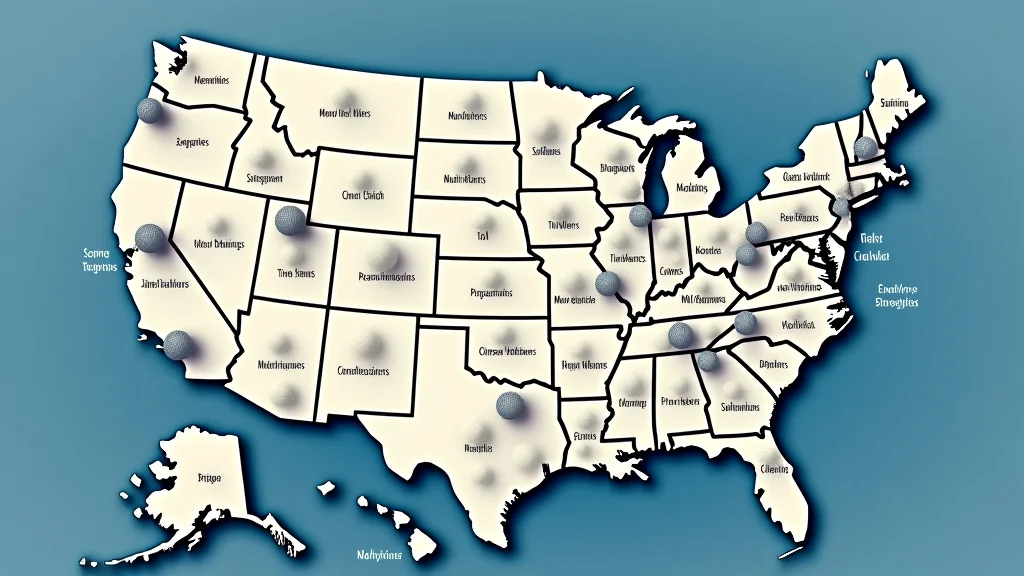
Figuring out the time zones in the United States can sometimes feel a little tricky, especially if you’re new to it. So many states, so many different times! But don’t worry, this guide will make understanding the us time zone map super easy.
We’ll walk through it step by step, so you’ll know exactly where you stand, time-wise. Get ready to see how simple it can be!
Key Takeaways
- You will learn the names of the main US time zones.
- You will discover which states are in each time zone.
- You will understand why time zones exist.
- You will find out how to easily check the current time in different zones.
- You will see how daylight saving time affects the map.
Understanding US Time Zones
Time zones are like slices of a pie around the Earth. Each slice represents a different hour. This is so that noon is roughly when the sun is highest in the sky in that area.
Without them, one side of the country would be dealing with midnight while another is enjoying lunch! The United States has several main time zones spread across its vast land. Knowing these zones helps with everything from scheduling calls to planning travel.
It’s a fundamental piece of information for anyone living in or interacting with the US.
What Are Time Zones?
Time zones were created to make things simpler. Imagine if everyone used the same clock everywhere. It would be dark at lunchtime in some places and bright at midnight in others!
So, the world agreed to divide itself into zones, each an hour apart. This system helps align local time with the sun’s position. It makes daily life more predictable and convenient for everyone.
This division helps ensure that local noon is generally around the time the sun is at its highest point in the sky. This makes sense for daily activities like work and school. It’s a global agreement that keeps our clocks in sync with our natural daylight cycles, no matter where we are.
Why Does The US Have So Many?
The United States is a very big country. It stretches all the way from the Atlantic Ocean to the Pacific Ocean. Because it covers such a large east-to-west distance, a single time would not make sense for everyone.
If the East Coast is having breakfast, the West Coast is still fast asleep. Therefore, multiple time zones are needed to keep local times practical and aligned with daylight hours.
This difference in daylight means that if it’s 9 AM on the East Coast, it’s only 6 AM on the West Coast. This allows for businesses to operate effectively across the country. It also helps people plan their day without dealing with confusing daylight differences.
The need for this practical alignment is the primary reason for the numerous time zones within the US.
The Main US Time Zones Explained
The continental United States is divided into four primary time zones. These zones run north to south and are based on longitude. Each zone has a specific name and is associated with a standard offset from Coordinated Universal Time (UTC).
When we talk about the “us time zone map,” these are the zones we are usually looking at.
Eastern Time
Eastern Time (ET) is the easternmost of the main time zones in the contiguous United States. It covers a large portion of the eastern seaboard and extends inland. When people refer to “US time zones,” this is often the first one they think of, as it is home to major cities like New York, Washington D.C., and Miami.
It is UTC-5 during standard time and UTC-4 during daylight saving time.
States that are fully or mostly in Eastern Time include Maine, Vermont, New Hampshire, Massachusetts, Rhode Island, Connecticut, New York, New Jersey, Pennsylvania, Delaware, Maryland, Virginia, North Carolina, South Carolina, Georgia, and Florida (most of it). A significant part of Alabama, Michigan, Indiana, Kentucky, and Tennessee also fall within this zone.
Eastern Standard Time (EST)
Eastern Standard Time is the observance during the colder months. Clocks are set back one hour from Eastern Daylight Time. This typically runs from early November to mid-March.
During EST, the time in New York City is UTC-5. This means it is five hours behind the Coordinated Universal Time.
For example, if it is 12:00 UTC, it would be 7:00 AM EST in New York. This allows for more daylight in the mornings during the winter. It’s important for scheduling and understanding travel times when one part of the country is in EST and another is not.
Eastern Daylight Time (EDT)
Eastern Daylight Time is observed during the warmer months, typically from mid-March to early November. Clocks are advanced by one hour. During EDT, the time in New York City is UTC-4.
This provides an extra hour of daylight in the evening, which many people enjoy for outdoor activities.
For instance, if it is 12:00 UTC, it would be 8:00 AM EDT in New York. This shift makes coordinating with regions that do not observe daylight saving time more complicated. Understanding this shift is key to accurate scheduling across different US locations and even internationally.
Central Time
Central Time (CT) is west of Eastern Time. It spans from the Great Lakes region down to the Gulf of Mexico. Major cities in this zone include Chicago, Houston, Dallas, and Minneapolis.
Central Time is UTC-6 during standard time and UTC-5 during daylight saving time. It covers a wide range of states, many of which have large populations.
States that are fully or mostly in Central Time include North Dakota (part), South Dakota (part), Nebraska, Kansas, Oklahoma, Minnesota, Iowa, Missouri, Arkansas, Louisiana, Wisconsin, Illinois, and Texas (most of it). Parts of Indiana, Michigan, Kentucky, Alabama, and Mississippi are also in this zone.
Central Standard Time (CST)
Central Standard Time is observed during the fall and winter. Clocks are set back one hour from Central Daylight Time. This is when the time in Chicago is UTC-6.
This means Chicago is six hours behind Coordinated Universal Time. This is the standard time for this zone before the clocks are adjusted forward.
If it’s 12:00 UTC, it would be 6:00 AM CST in Chicago. This timekeeping helps to align waking hours more closely with daylight during the darker months of the year. It’s a consistent part of the annual timekeeping cycle for millions of people.
Central Daylight Time (CDT)
Central Daylight Time is observed during the spring and summer. Clocks are advanced by one hour from Central Standard Time. During CDT, the time in Chicago is UTC-5.
This provides more daylight in the evenings for people to enjoy after work or school.
For example, if it is 12:00 UTC, it would be 7:00 AM CDT in Chicago. This adjustment is a significant factor when planning events or communications involving multiple time zones. It is essential for accurate scheduling and coordination.
Mountain Time
Mountain Time (MT) is located to the west of Central Time. It is named for the Rocky Mountains. This zone includes states like Colorado, Utah, and parts of Montana.
Mountain Time is UTC-7 during standard time and UTC-6 during daylight saving time. Not all states in this zone observe daylight saving time.
States that are fully or mostly in Mountain Time include Montana, Idaho (part), Wyoming, Colorado, Utah, New Mexico, Arizona (most of it does not observe DST), and Texas (small part). Parts of North Dakota, South Dakota, Nebraska, Kansas, and Oregon are also in this zone. Arizona is a notable exception as it mostly sticks to MST year-round.
Mountain Standard Time (MST)
Mountain Standard Time is the base time for this zone. It is UTC-7. For much of the year, Arizona observes MST year-round, making it a unique case on the us time zone map.
This means that during standard time, Arizona is seven hours behind UTC. This consistency is helpful for residents and visitors there.
If it is 12:00 UTC, it would be 5:00 AM MST in Denver. However, in most of Arizona, it would also be 5:00 AM MST, as they do not switch to daylight saving. This can cause confusion when planning across state lines within the broader Mountain Time region.
Mountain Daylight Time (MDT)
Mountain Daylight Time is observed in most of the Mountain Time zone during the warmer months. Clocks are advanced by one hour. During MDT, the time is UTC-6.
This adds an extra hour of evening daylight for states that observe the switch.
For example, if it is 12:00 UTC, it would be 6:00 AM MDT in Denver. This is one hour ahead of Arizona’s standard time during the same period. This difference is important for anyone needing to communicate or coordinate across these specific areas during the daylight saving period.
Pacific Time
Pacific Time (PT) is the westernmost of the main continental time zones. It covers states along the Pacific coast, including California, Oregon, and Washington. Major cities include Los Angeles, San Francisco, and Seattle.
Pacific Time is UTC-8 during standard time and UTC-7 during daylight saving time.
States that are fully or mostly in Pacific Time include Washington, Oregon, California, Nevada, and Idaho (part). This zone is densely populated and a major hub for technology and entertainment industries. It represents the end of the time zone progression across the mainland US.
Pacific Standard Time (PST)
Pacific Standard Time is observed during the fall and winter. Clocks are set back one hour from Pacific Daylight Time. During PST, the time is UTC-8.
This means that when it is noon UTC, it is 4:00 AM PST in Los Angeles. This is the standard time before the spring forward adjustment.
This time zone affects millions of people and businesses. Understanding PST is key for anyone making calls or planning events that involve the West Coast during these months. It’s the base time before daylight saving begins.
Pacific Daylight Time (PDT)
Pacific Daylight Time is observed during the spring and summer months. Clocks are advanced by one hour. During PDT, the time is UTC-7.
This gives an extra hour of daylight in the evenings for residents of this region.
If it is 12:00 UTC, it would be 5:00 AM PDT in Los Angeles. This is an hour later than PST for the same UTC time. This change can affect flight schedules, broadcasts, and international business communications.
It’s a constant element of the us time zone map that requires attention.
Beyond The Continental US
The United States also includes territories and states outside the contiguous 48. These have their own distinct time zones, adding more layers to the overall us time zone map.
Alaska Time
Alaska Time (AKST/AKDT) covers most of the state of Alaska. It is UTC-9 during standard time and UTC-8 during daylight saving time. This is two hours behind Pacific Standard Time.
It follows the same daylight saving pattern as the Pacific Time Zone.
Alaska is a vast state, and this time zone helps align daily activities with its daylight patterns. For example, during standard time, Alaska is nine hours behind UTC. This means that when it is noon UTC, it is 3:00 AM AKST in Anchorage.
Hawaii-Aleutian Time
Hawaii-Aleutian Time (HST/HDT) includes Hawaii and the westernmost Aleutian Islands of Alaska. Hawaii observes Hawaii Standard Time (HST) year-round, which is UTC-10. This means Hawaii is never on daylight saving time.
It is consistently ten hours behind Coordinated Universal Time.
The Aleutian Islands west of 169°30′ W longitude observe Hawaii-Aleutian Daylight Time (HDT) during the summer months, which is UTC-9. This is the only part of the US that observes daylight saving time but is not part of the contiguous 48 or Alaska mainland. It adds a unique element to the time zone map.
Other US Territories
Beyond the states, US territories have their own times. Puerto Rico and the US Virgin Islands are in the Atlantic Standard Time zone (AST), which is UTC-4 year-round. This means they do not observe daylight saving time.
Guam and the Northern Mariana Islands are in Chamorro Standard Time (CHST), which is UTC+10.
American Samoa is in Samoa Standard Time (SST), which is UTC-11. These territories are spread across different parts of the globe, each with a time zone that makes sense for its location. This creates a complex but logical us time zone map when all territories are considered.
Daylight Saving Time Explained
Daylight Saving Time (DST) is a practice adopted by many countries, including most of the United States. It involves advancing clocks by one hour during warmer months. The goal is to make better use of daylight.
It starts on the second Sunday in March and ends on the first Sunday in November.
When DST begins, clocks are moved forward one hour. This makes it seem like the sun sets later in the evening. It’s intended to reduce the need for artificial lighting in the evenings.
However, it also means sunrises happen an hour later in the morning.
States That Do Not Observe DST
Not all of the US observes Daylight Saving Time. Arizona, with the exception of the Navajo Nation, does not change its clocks. Hawaii also remains on its standard time year-round.
These areas maintain their standard time, UTC-7 for most of Arizona and UTC-10 for Hawaii. This creates a difference in time compared to neighboring areas that do observe DST.
For example, during the summer months, when Phoenix is on MST (UTC-7), Denver is on MDT (UTC-6). This means Denver is one hour ahead of Phoenix. This is a common point of confusion for people traveling or coordinating across these areas.
The Navajo Nation within Arizona does observe DST, adding another layer of complexity.
Impact of DST on the US Time Zone Map
Daylight Saving Time shifts the effective time zones for much of the year. For instance, Eastern Standard Time (EST, UTC-5) becomes Eastern Daylight Time (EDT, UTC-4) during DST. Similarly, Pacific Standard Time (PST, UTC-8) becomes Pacific Daylight Time (PDT, UTC-7).
This means the differences between time zones can change by an hour depending on the time of year.
When DST is in effect, the gap between Eastern Time and Pacific Time remains four hours. EDT (UTC-4) is still four hours ahead of PDT (UTC-7). However, the actual UTC offsets change.
This consistent four-hour difference is a key feature of the us time zone map throughout the year.
Tips for Using the US Time Zone Map
Knowing the different time zones is helpful for many reasons. Whether you’re scheduling a meeting, calling family, or planning a trip, having a clear understanding can save you time and avoid confusion. There are several tools and methods to help you keep track.
Checking Current Times
The easiest way to check current times is by using online search engines. Simply typing “time in New York” or “current time in Los Angeles” will give you the precise local time. Many websites offer world clocks that display multiple time zones at once.
These are invaluable resources for anyone needing to track times across different regions.
Your smartphone also usually has a world clock feature. You can add different cities to see their current times side-by-side. This makes it very simple to see the time difference at a glance.
These digital tools have made managing time zone differences much easier than in the past.
Scheduling Across Zones
When scheduling events, it’s best practice to state the time zone explicitly. For example, “Meeting at 2:00 PM EST” is much clearer than just “Meeting at 2:00 PM.” Many online scheduling tools allow you to set events in a specific time zone or automatically convert times for participants in different locations. This helps avoid misunderstandings.
Always confirm the time zone when making important calls or appointments. If you are calling someone on the West Coast from the East Coast, remember they are three hours behind. What is noon for you is 9 AM for them.
Double-checking can prevent missed calls and schedule conflicts.
Common Myths Debunked
Myth 1: All of Arizona is on Mountain Standard Time year-round.
Reality: Most of Arizona observes Mountain Standard Time (MST, UTC-7) all year. However, the Navajo Nation, which is within Arizona, does observe Daylight Saving Time. This means that during the summer, the Navajo Nation will be on Mountain Daylight Time (MDT, UTC-6), which is one hour ahead of the rest of Arizona.
Myth 2: Time zones are based strictly on state borders.
Reality: While time zones often follow state lines, they are primarily based on lines of longitude and then adjusted for practical and political reasons. This is why some states are split between two time zones, and why borders between time zones don’t always follow exact state boundaries. The us time zone map shows these adjustments for convenience.
Myth 3: Daylight Saving Time saves a significant amount of energy.
Reality: The actual energy savings from Daylight Saving Time are a subject of ongoing debate and research. Some studies show minor savings, while others suggest negligible or even increased energy consumption due to greater use of air conditioning in warmer evenings. The primary reasons for DST are more about aligning waking hours with daylight.
Myth 4: Every US state uses Daylight Saving Time.
Reality: As mentioned, Hawaii and most of Arizona do not observe DST. Additionally, US territories like Puerto Rico, Guam, and American Samoa do not observe DST. This leaves a significant portion of the US population unaffected by the twice-yearly clock changes.
Frequently Asked Questions
Question: What is the main difference between EST and EDT?
Answer: EST stands for Eastern Standard Time (UTC-5), and EDT stands for Eastern Daylight Time (UTC-4). EDT is observed during the spring and summer months, when clocks are moved forward one hour to provide more evening daylight. EST is observed during the fall and winter.
Question: Which US time zone is furthest west?
Answer: The Hawaii-Aleutian Time Zone is the furthest west, with Hawaii observing UTC-10 year-round. Parts of the Aleutian Islands also fall under this broad zone, though some observe daylight saving.
Question: How many time zones does the United States have in total?
Answer: Including states, territories, and their daylight saving variations, the United States has 11 time zones. These range from UTC-11 to UTC+10.
Question: Why does Arizona not observe Daylight Saving Time?
Answer: Arizona opted out of DST to avoid the heat. During the summer months, keeping clocks on MST (UTC-7) helps keep homes cooler in the evenings, as artificial lighting is less needed when it’s still light out.
Question: Is it possible to have a meeting at the same time across different US time zones?
Answer: Yes, but you must be very clear about the time zone. For example, a meeting at 10 AM PST is 1 PM EST. Clearly stating the time zone prevents confusion.
Final Thoughts
Understanding the us time zone map is straightforward once you know the main zones and how daylight saving time works. From Eastern to Pacific, Alaska to Hawaii, each region has its time. Knowing these differences makes planning and communication easy.
You can now confidently manage your schedule across the country.
Related Post
Understanding The Time Zone Map USA
Figuring out the time zone map usa can seem a bit tricky when you first…