
Understanding Time Zones In The United States
Time Zone World >> Time Zone>> Understanding Time Zones In The United States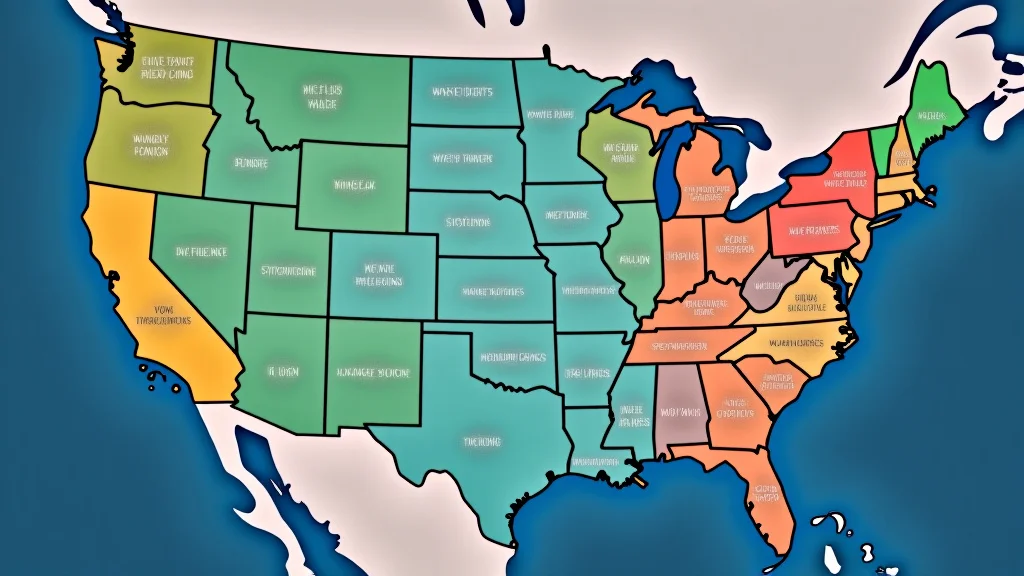
Understanding Time Zones In The United States
Figuring out time zones in the United States can seem tricky at first. With so many states and different times, it’s easy to get confused. But don’t worry!
We’ll break down the time zones united states for you in a super simple way. You’ll be a pro in no time. Let’s get started with what you’ll learn next.
Key Takeaways
- You will learn about the main time zones in the United States.
- We will explain why these time zones exist and how they affect daily life.
- You will see how to easily figure out the current time in different parts of the country.
- We will cover common questions people have about US time zones.
- You’ll discover why knowing about time zones is helpful for many situations.
Exploring The Time Zones United States
The United States is a very big country, stretching across many miles from east to west. Because the sun rises and sets at different times in different places, we have different time zones. Think of it like a big clock that is divided into several parts.
Each part is a time zone, and it helps make sure that noon is roughly when the sun is highest in the sky in that area. This system makes daily life much easier, from school schedules to business meetings.
Why Do We Have Time Zones
The idea of time zones was created to help organize time across large areas. Before standardized time zones, every town often had its own local time, based on the sun. This made it very hard to coordinate things like train schedules.
When trains needed to run on time across the country, a common system was needed. Standardized time zones were adopted in the late 1800s to solve this problem. They are based on lines of longitude, with each zone typically being about 15 degrees wide.
The United States officially adopted standard time zones in 1918. This allowed for better communication and travel. Imagine trying to plan a phone call from New York to California without knowing the time difference.
It would be a constant guessing game. Time zones ensure that, for the most part, daylight hours align with typical waking and working hours across the country. This consistency is vital for everything from broadcasting live events to coordinating national services.
The Main Time Zones
There are six main time zones in the contiguous United States, plus two more for Alaska and Hawaii. These are Eastern, Central, Mountain, Pacific, Alaska, and Hawaii-Aleutian. Each zone is one hour ahead of the one to its west.
For example, when it’s noon in the Eastern Time Zone, it’s 11 AM in the Central Time Zone, 10 AM in the Mountain Time Zone, and 9 AM in the Pacific Time Zone.
The Eastern Time Zone is the furthest east and includes cities like New York City, Miami, and Washington D.C. The Central Time Zone follows, covering areas like Chicago, Dallas, and New Orleans. Then comes the Mountain Time Zone, home to Denver, Phoenix (though Arizona doesn’t observe daylight saving time), and Salt Lake City.
The Pacific Time Zone is on the west coast, with major cities like Los Angeles, San Francisco, and Seattle. Alaska has its own time zone, and Hawaii has another, the Hawaii-Aleutian Time Zone.
Daylight Saving Time
Most of the United States observes Daylight Saving Time (DST) from March to November. During DST, clocks are moved forward by one hour. This is done to make better use of daylight in the evenings during warmer months.
It means that the time difference between zones effectively shifts for part of the year. For example, the difference between Eastern and Pacific Time remains 3 hours, but the actual clock times change.
Daylight Saving Time is not observed in all US states. Hawaii and most of Arizona do not change their clocks. This can sometimes add a bit of confusion when coordinating across states.
For instance, when DST is in effect, Phoenix remains on Mountain Standard Time year-round, while the rest of the Mountain Time Zone moves to Mountain Daylight Time. This means Arizona is effectively one hour behind other Mountain Time Zone states during DST periods.
How Time Zones Work In Practice
Understanding how time zones work in practice is key to avoiding mix-ups. When you see a time for an event, it’s usually given in a specific time zone. You then need to know your own local time zone to figure out when to tune in or show up.
This is especially important when dealing with remote work, online meetings, or booking travel.
For example, if a webinar is scheduled for 2 PM Eastern Time, and you are in California, you know that 2 PM Eastern is 11 AM Pacific Time. So, you would join the webinar at 11 AM your local time. This simple calculation prevents people from missing important events or showing up too early or too late.
It’s a fundamental skill for anyone living in or interacting with different parts of the United States.
Scheduling And Coordination
Coordinating schedules across different time zones is a common task in business and personal life. Many online tools and calendar applications allow you to set events in a specific time zone and then display them in your local time. This feature automatically adjusts the time for each participant based on their location.
It’s a very helpful way to avoid errors.
When scheduling a meeting, it’s often best practice to state the time and the time zone clearly. For example, “Meeting at 10 AM PST” or “Call at 3 PM EST.” This leaves no room for misinterpretation. Some businesses use Universal Coordinated Time (UTC) for global scheduling to remove all ambiguity, but within the US, sticking to the well-understood time zones is common.
Travel And Planning
Traveling across the United States means crossing time zones. When you fly from New York to Los Angeles, you will move back three hours. This means you gain three hours of time during your trip.
If you leave New York at 10 AM EST, you will arrive in Los Angeles around 1 PM PST. This can be disorienting at first, but you quickly get used to it.
Planning travel involves adjusting your internal clock to the new time zone. This is often called combating jet lag, although it’s less severe with domestic travel compared to international. When booking flights or making reservations, always double-check the local time at your destination.
This ensures you arrive on time for check-ins, appointments, or flights.
Examples Of Time Zone Impact
Consider live television broadcasts. A show that airs at 8 PM Eastern Time will air at 5 PM Pacific Time. This is done so that the show can be broadcast during prime time viewing hours on both coasts.
Without time zones, people on the west coast might have to watch popular shows very late at night.
Another example is business operations. A company with offices in New York and Los Angeles needs to manage communication effectively. When it’s closing time for the New York office, the Los Angeles office is just getting started.
This allows for a longer operational day when considering both locations. Businesses often stagger work hours or use technology to bridge this gap.
Understanding The Mechanics Of Time Zones
Time zones are more than just clock changes; they are a system designed for practical living. They are based on scientific principles of Earth’s rotation and are crucial for global coordination, even within a single large country like the United States. Understanding how they are set up and why they matter helps us appreciate the order they bring to our daily lives.
Longitude And Time
The Earth rotates 360 degrees in 24 hours. This means it rotates 15 degrees per hour (360 / 24 = 15). Time zones are roughly based on these 15-degree lines of longitude.
The Prime Meridian, which runs through Greenwich, London, is the reference point for Coordinated Universal Time (UTC). Time zones are then described as being a certain number of hours ahead or behind UTC.
For example, Eastern Standard Time (EST) is UTC-5, meaning it is 5 hours behind UTC. Pacific Standard Time (PST) is UTC-8, which is 8 hours behind UTC. These offsets change during Daylight Saving Time, when zones might be described as UTC-4 (EDT) or UTC-7 (PDT).
The precise boundaries of time zones are not perfectly straight lines of longitude; they are adjusted to follow state, county, or other geographical boundaries for convenience.
The Role Of Greenwich Mean Time (GMT) And UTC
Greenwich Mean Time (GMT) was historically the standard for timekeeping. However, it has largely been replaced by Coordinated Universal Time (UTC). UTC is a highly precise atomic time standard.
It serves as the primary time standard by which the world regulates clocks and time. Most time zones are expressed as an offset from UTC.
For instance, if you are in the Central Time Zone (CST) during standard time, your time is UTC-6. If you are in the Pacific Time Zone (PST), your time is UTC-8. Knowing these UTC offsets helps in international communication and scheduling, especially when coordinating with countries outside of the United States.
It’s the global language of time.
How Time Zone Boundaries Are Drawn
Time zone boundaries are not perfectly straight lines. They often zigzag to accommodate local preferences and geographical features. For example, a time zone boundary might run down the middle of a state, with one part of the state in one time zone and the other part in a different one.
This can be done for practical reasons, like keeping communities on the same side of the boundary in the same time zone for business and social reasons.
Consider the border between the Central and Mountain Time Zones. While many states are entirely within one zone, some, like North Dakota and South Dakota, have parts in both. This can sometimes lead to confusion for residents or visitors who are near these boundaries.
The goal is to make timekeeping as practical as possible for the people living in the affected areas. It’s a balance between scientific consistency and human convenience.
Impact On Technology And Communication
Modern technology relies heavily on accurate timekeeping and time zone awareness. GPS systems use precise atomic clocks and account for time zones and relativistic effects. Internet servers also use UTC for logging events and synchronizing data.
When you send an email or access a website, the timestamp is often recorded using UTC, which is then converted to your local time zone by your device.
This synchronization is critical for many applications, from financial trading to online gaming. If time zones were not accurately handled by technology, transactions could fail, data could be corrupted, and communication would be severely disrupted. The seamless functioning of the internet and global communication networks depends on a consistent and well-understood system of time zones.
Common Myths Debunked
Myth 1: All of Texas is in the Central Time Zone.
While most of Texas observes Central Time, a small western portion, including El Paso and Hudspeth counties, is actually in the Mountain Time Zone. This is an exception to the general rule for Texas.
Myth 2: Arizona is always one hour behind California.
Arizona (except for the Navajo Nation) does not observe Daylight Saving Time. So, while Arizona is on Mountain Standard Time (MST) year-round (UTC-7), Pacific Time Zones (like California’s) switch to Pacific Daylight Time (PDT, UTC-7) during the summer. During DST, Arizona and California are in the same time zone.
During standard time, Arizona is one hour behind Pacific Standard Time (PST, UTC-8).
Myth 3: Time zones are perfectly straight lines on a map.
As mentioned before, time zone boundaries are often irregular and follow political or geographical lines for practical reasons, not just lines of longitude.
Myth 4: Time zone differences are always exactly one hour.
While the main contiguous US time zones are one hour apart, there are exceptions. For example, the Navajo Nation in Arizona observes Daylight Saving Time, putting them one hour ahead of the rest of Arizona during DST. Also, some US territories like Samoa and Howland Island are not standard hours from UTC.
Frequently Asked Questions
Question: What is the time difference between New York and Los Angeles?
Answer: New York is in the Eastern Time Zone and Los Angeles is in the Pacific Time Zone. There is a 3-hour difference. Los Angeles is 3 hours behind New York.
Question: Does Hawaii observe Daylight Saving Time?
Answer: No, Hawaii does not observe Daylight Saving Time. It remains on Hawaii Standard Time (HST) year-round.
Question: Which time zone is Denver in?
Answer: Denver, Colorado, is in the Mountain Time Zone.
Question: Why is time zone information important for online shopping?
Answer: When you order from online stores, shipping cut-off times are often based on the seller’s local time zone. Knowing this helps you ensure your order ships out on the same day.
Question: Are there more than six time zones in the United States?
Answer: Yes, counting Alaska and Hawaii, there are six main time zones in US states. However, including US territories and specific observances like Samoa Time, the total number of distinct time zones associated with the US is higher.
Conclusion
Understanding the time zones united states is straightforward once you know the basics. We have distinct zones like Eastern, Central, Mountain, and Pacific, each an hour apart. This system helps align daily activities with daylight across our vast nation.
Knowing these zones makes travel, scheduling, and communication much easier.
Related Post

California Time Zone Explained Simply
Have you ever been confused by the california time zone? It can be tricky for…